case study 01b · social media marketing · private

Building the Audience Behind the Store.

Alongside the website relaunch, I also owned Absolute New York’s social media and marketing strategy — building the brand’s audience from the ground up across Instagram and TikTok. This case study covers the audience strategy, content system, and campaign approach behind that growth.

Role
Creative Lead
Timeline
2024-2025
Focus
Brand awareness & organic growth
Team
1 marketing specialist · 1 associate designer
00 — overview

Growth needed an audience, not just a storefront.

A redesigned store doesn’t generate traffic on its own — it needs an audience pointed at it. I stepped in to run Absolute New York’s social channels, define who the brand was actually talking to, and replace one-off posting with a repeatable content system built around UGC, consistency, and paid amplification.

01 · audience

Defined who we were for.

Set a clear target audience and used it to decide what we posted, and why, instead of posting reactively.

02 · content system

Built a content engine.

Replaced inconsistent posting with UGC, a real content calendar, and a consistent brand identity across every post.

03 · paid amplification

Layered in ads.

Ran targeted ad campaigns on top of organic content to extend reach beyond our existing followers.

part 01 · audience & goals

Two goals that pulled in different directions.

01 — the challenge

Growth without a strategy

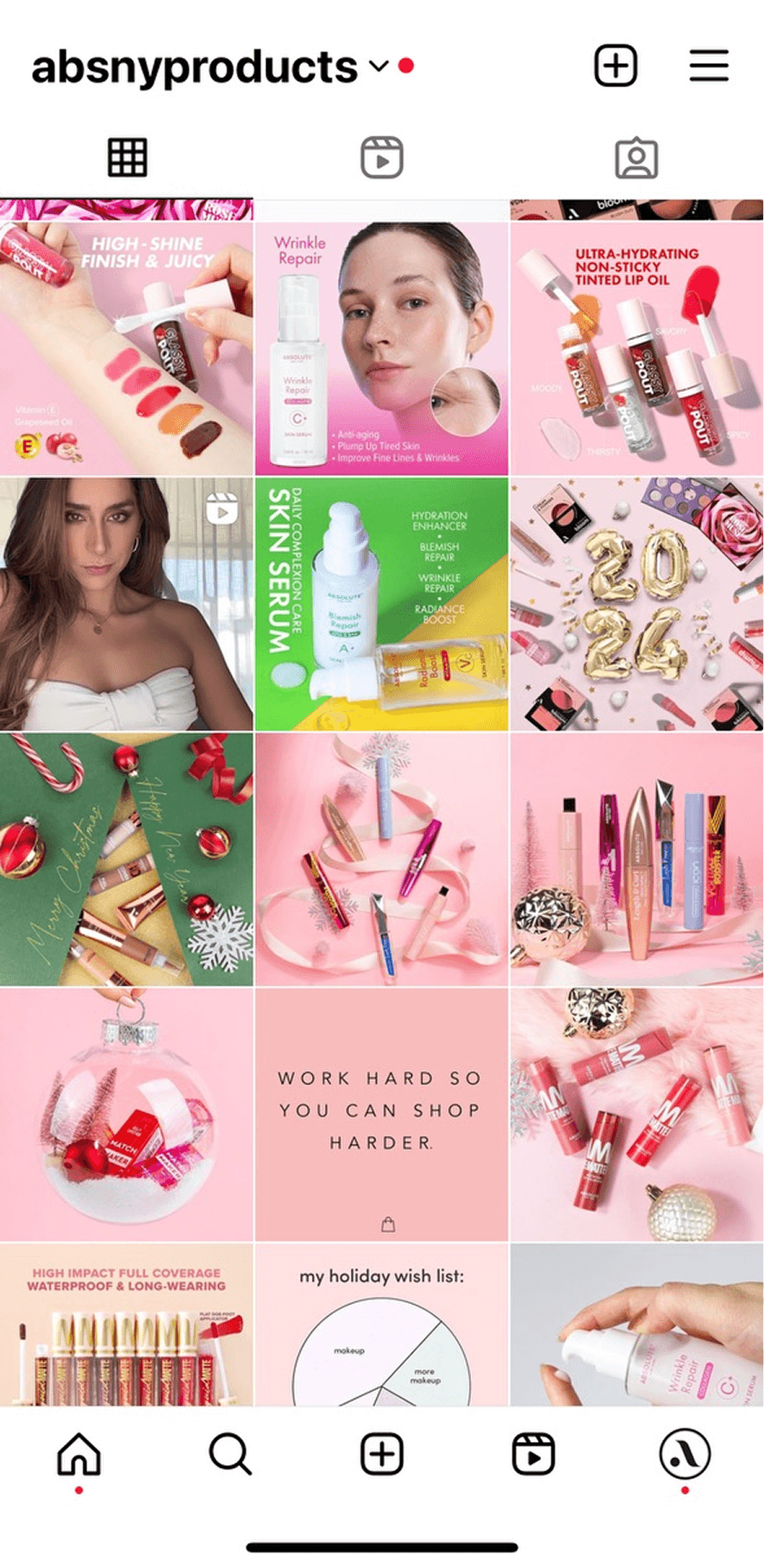
Before I stepped in, the account leaned almost entirely on flat-lay product photography and text-heavy graphics — the same static format post after post, no video, nothing showing the product actually being used. Auditing the feed and past performance surfaced five issues holding growth back.

The feed before — flat-lay product photography and text-heavy graphics, no video.
  1. 01

    Flat, text-heavy content

    Almost every post was a flat-lay product shot with bold text laid over it — no video, no motion, nothing showing the product in use.

  2. 02

    No defined target audience

    Content was made for “everyone,” which in practice meant it wasn’t built for anyone in particular.

  3. 03

    No content calendar or consistency

    Posting was reactive and irregular, so the account never built the posting rhythm that platforms reward.

  4. 04

    Scattered brand identity

    Visuals, tone, and messaging shifted post to post, so the feed never read as one cohesive brand.

  5. 05

    No priority between awareness and sales

    Every post tried to sell, which crowded out the brand-building content that actually earns an audience.

the competitive read

What the rest of the industry was already doing.

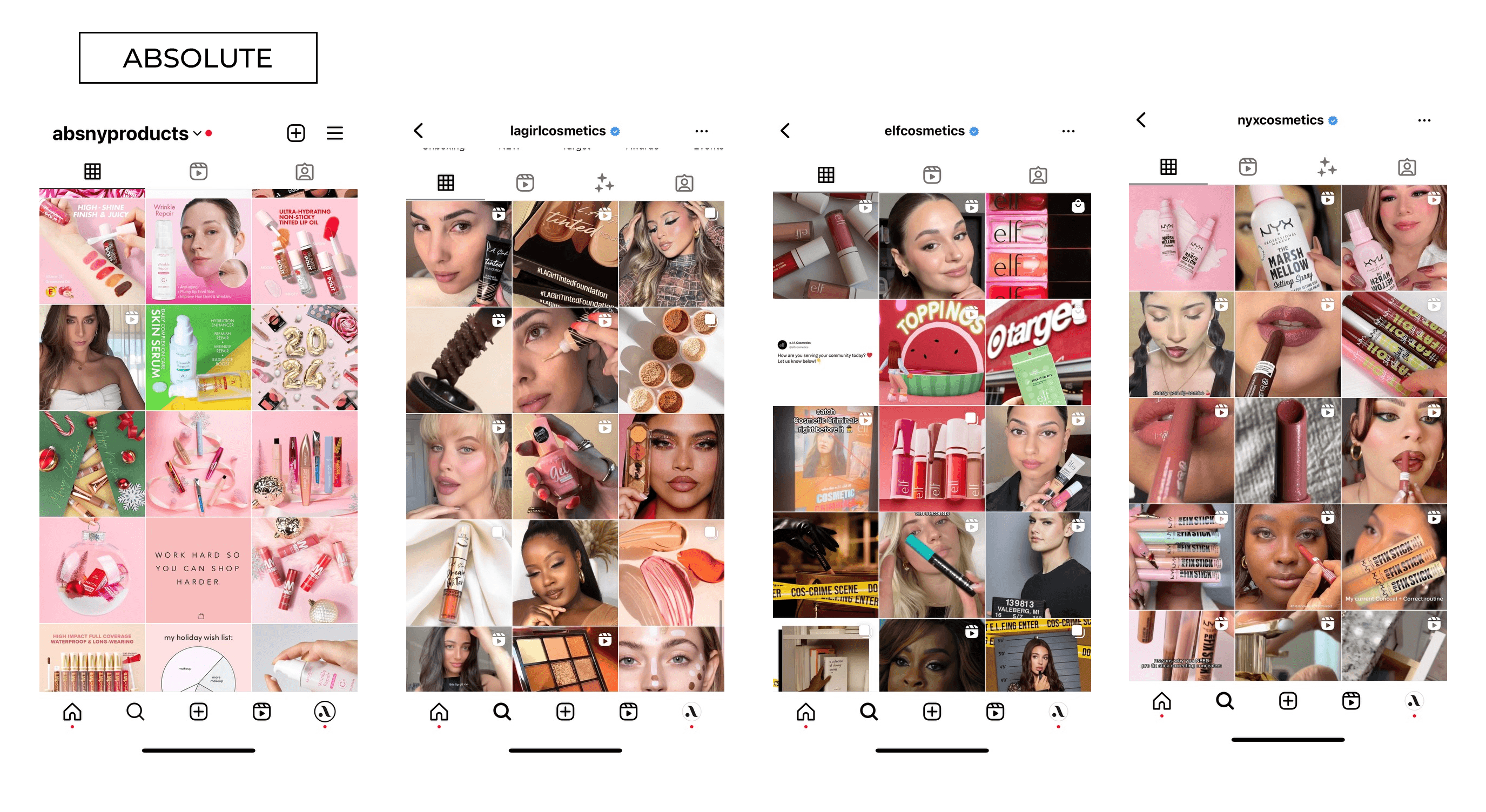
I ran a competitor analysis on L.A. Girl, e.l.f., and NYX. All three led with reels and UGC: real people applying the product on camera, close ups of texture and pigment, real life use instead of flat lay shots. It confirmed that video, UGC, consistency, and paid ads were the baseline at established brands, not extras.

absnyproducts compared to L.A. Girl, e.l.f., and NYX: video and UGC vs. flat lay and static.
02 — audience & goals

Choosing who we were talking to — and why.

I started by defining the actual target audience — who they were, what they cared about, and what would make them stop scrolling — instead of designing content for a generic beauty shopper. That definition became the filter for every content and campaign decision that followed.

The bigger decision was strategic: brand awareness vs. sales revenue as the primary goal. I made the case for prioritizing awareness first — a larger, more engaged audience compounds into revenue over time, while content that tries to sell before anyone knows or trusts the brand just gets scrolled past. Sales-focused content stayed in the mix, but awareness set the direction.

the call

We optimized for a bigger, more engaged audience first — trusting that revenue would follow reach, not the other way around.

03 — the approach

Three moves that turned followers into an audience.

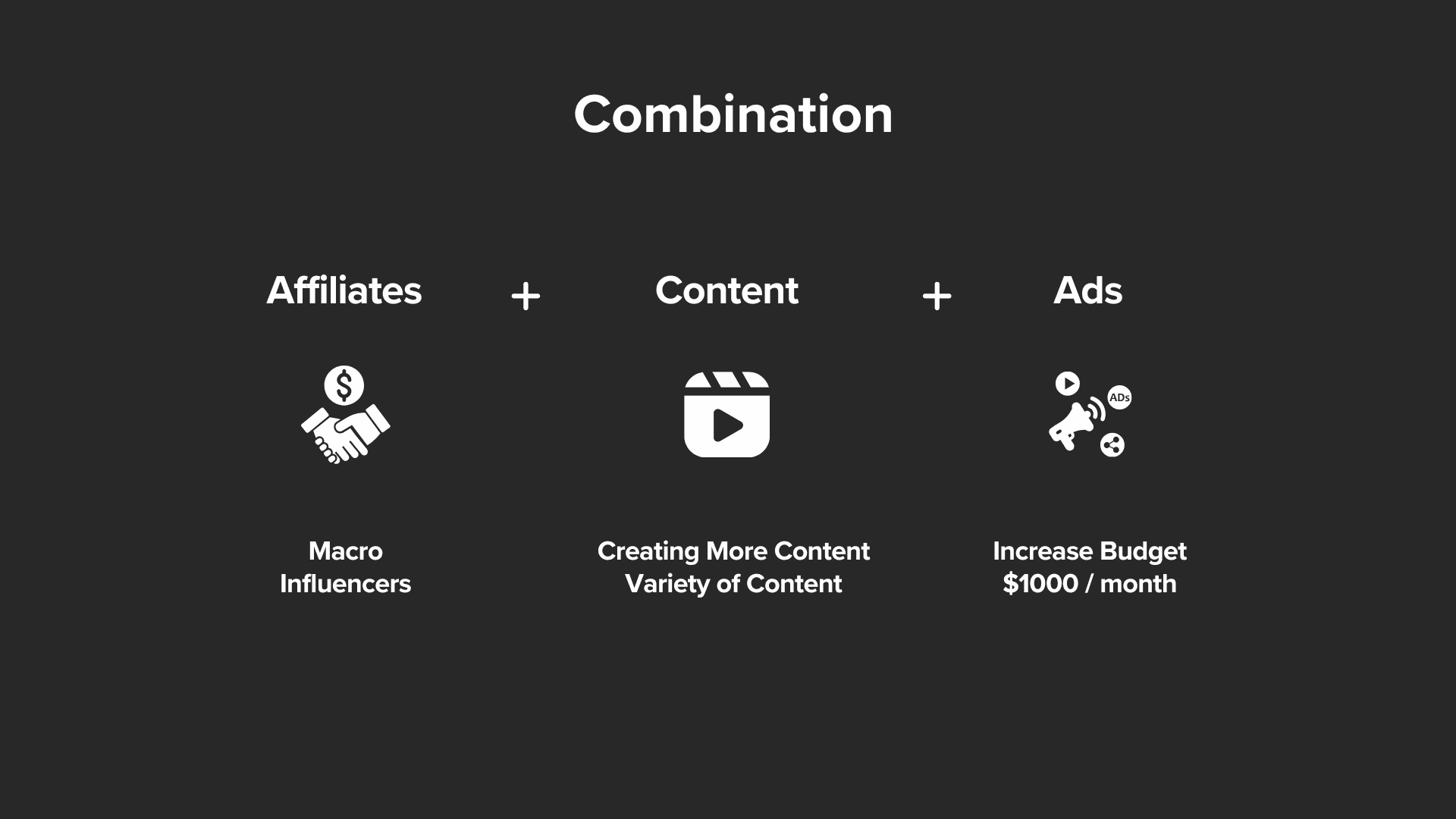
With the audience defined, I built the system that would consistently reach them — UGC for trust, consistency for recognition, and paid media for reach.

move 01

User-generated content.

I sourced and collaborated with real customers and creators to feature genuine product use instead of polished studio shots exclusively. UGC read as more trustworthy, gave us a steady stream of content, and let the audience see themselves in the brand.
move 02

Consistency across every post.

I built a content calendar and a set of recurring content pillars, paired with a consistent visual identity — color, type, tone — so the feed read as one brand instead of a series of disconnected posts. Consistency, not virality, is what built the posting rhythm platforms reward.

move 03

Paid ad campaigns.

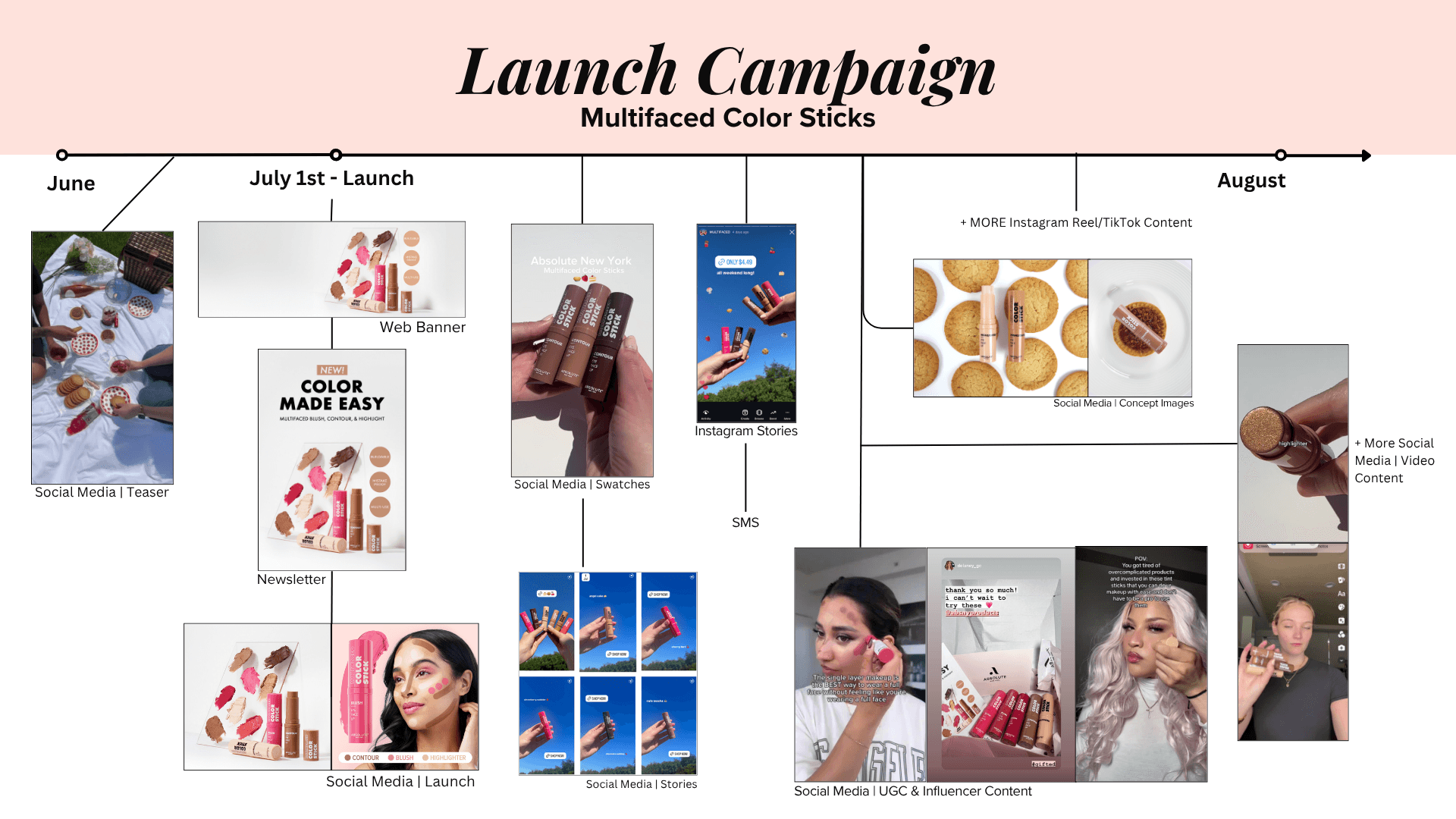
Layered targeted ad campaigns on top of the organic content to reach beyond our existing followers and put our highest-performing content in front of the audience we’d defined. Every launch started with a full cross-channel plan — teaser, banner, email, social, SMS — so every touchpoint stayed in order and pointed at the same audience.

the framework

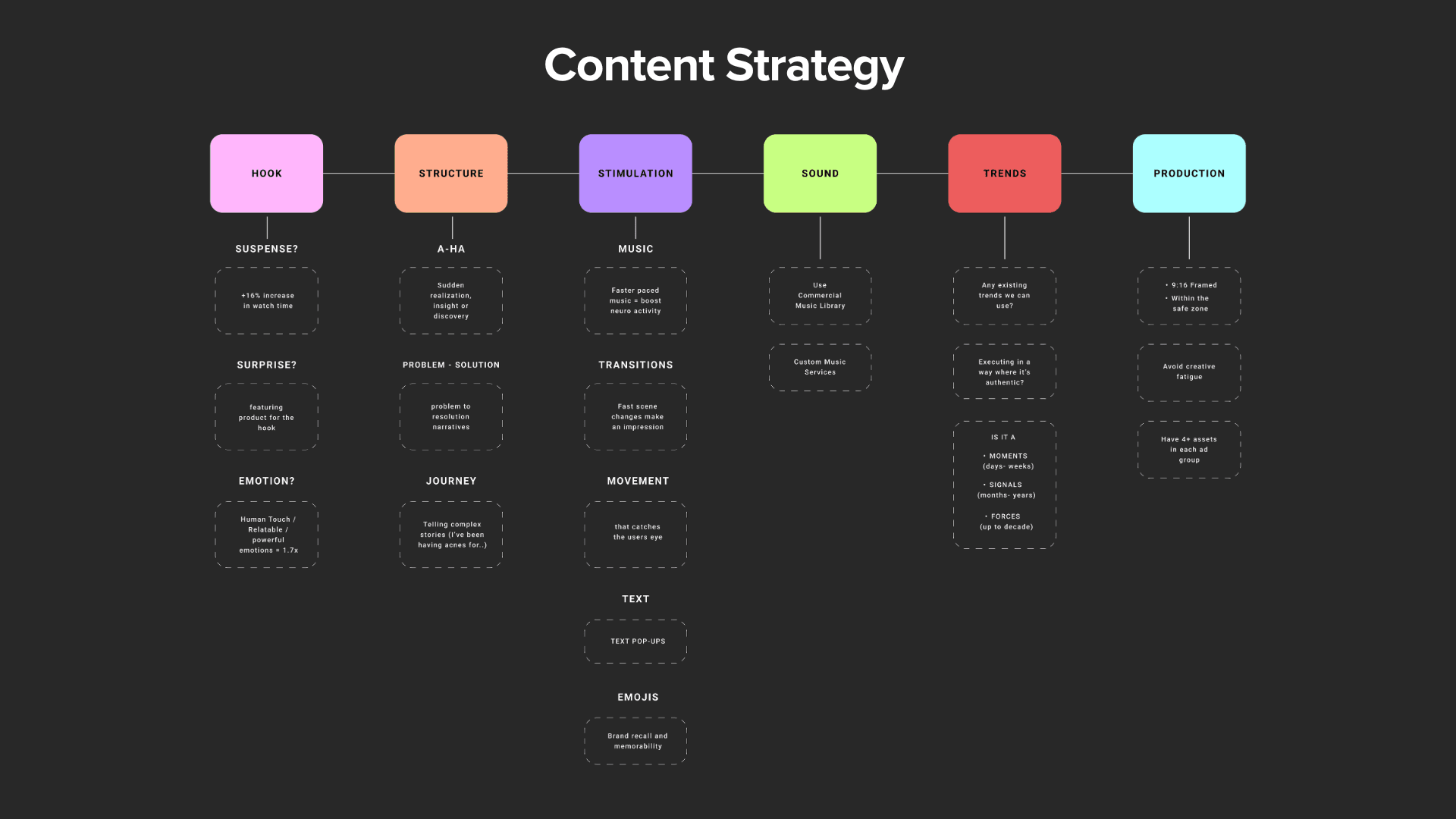
A repeatable system for video.

the levers

Three levers, one plan.

UGC outperformed everything else in the feed, so scaling it was the obvious move — but outreach, shipments, and content collection were all manual and couldn’t keep up. I brought in GRIN to run creator outreach, seeding, and content collection in one place, letting the affiliate program above run at volume.

it worked

Reels and UGC did what the plan said they would.

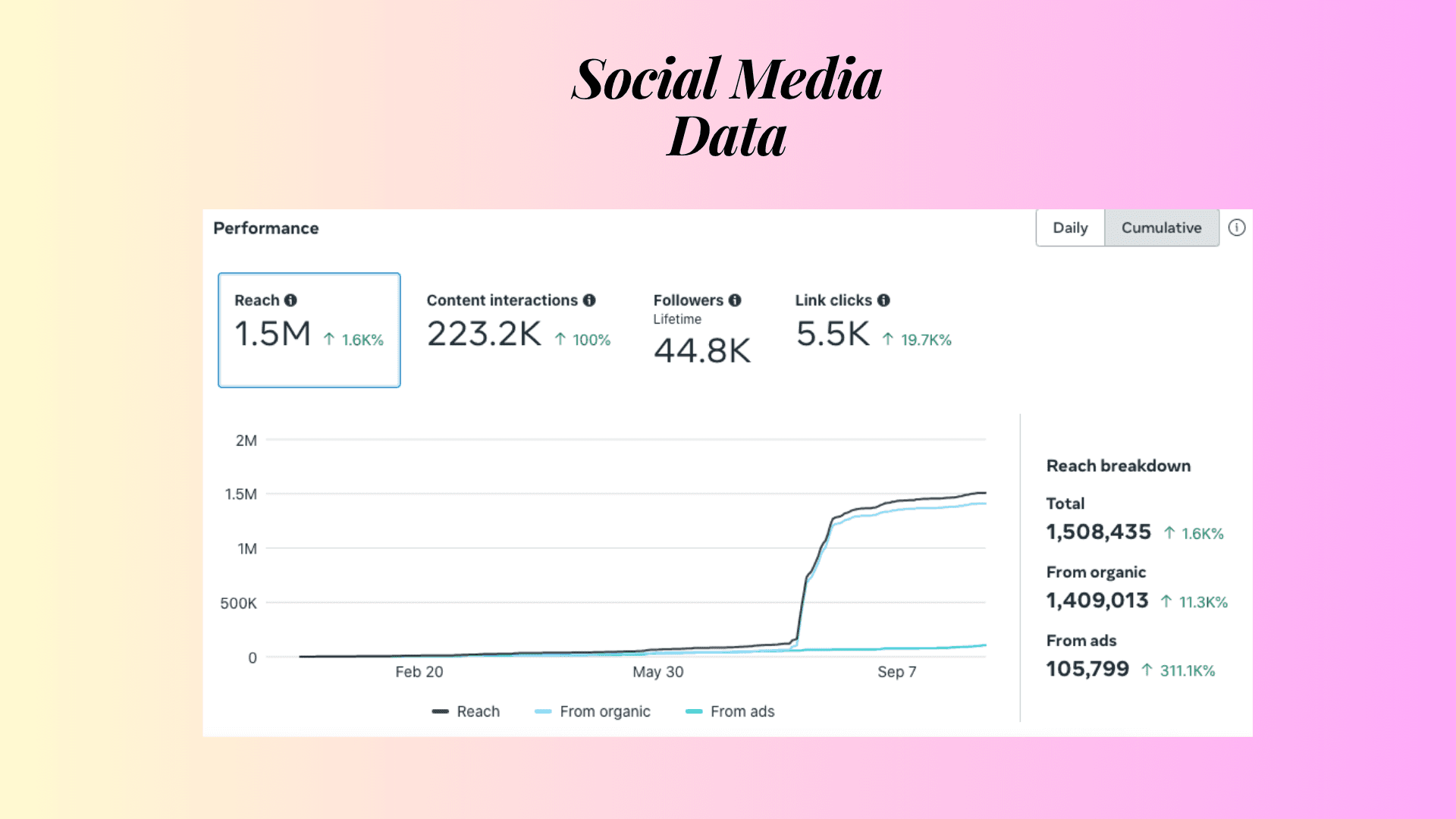
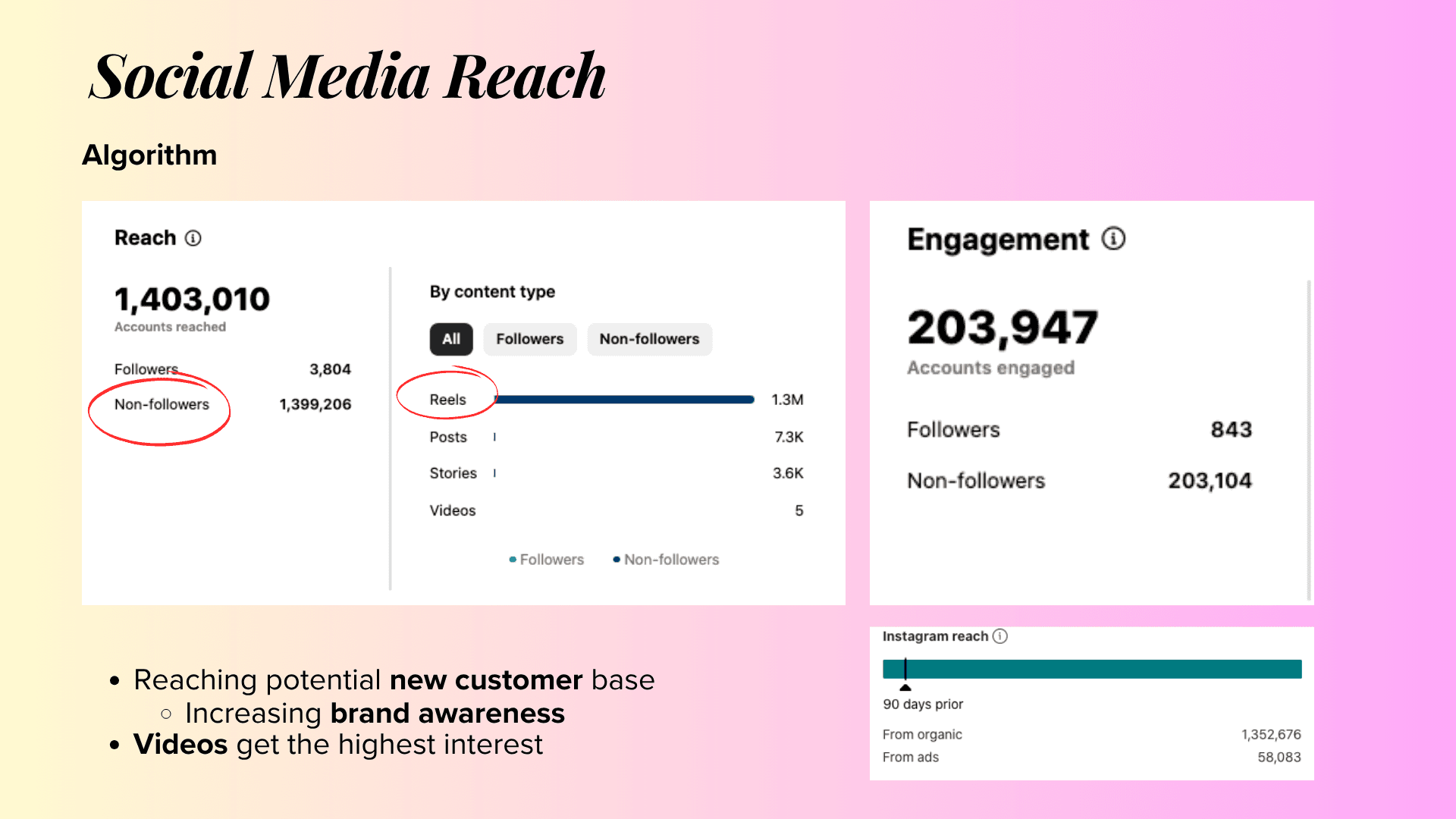
Once reels and UGC became the default, reach followed: 1.3M from reels versus 7.3K from static posts, with 99% of that reach coming from non-followers — new people discovering the account through the framework above, not just existing followers seeing more of it.

“We stopped broadcasting to existing followers and started reaching new ones. Format was the lever — video reached 178x what static did, and 99% of that reach was people who’d never heard of us.”

04 — execution

How I actually ran it.

I defined the audience, built the content and campaign system, produced and sourced the creative, and ran paid media — then used performance data to keep tuning the strategy.

01
Audience research
Defined who we were targeting and what would actually earn their attention.
02
Content strategy
Built recurring content pillars and a real posting calendar.
03
UGC & partnerships
Sourced creator and customer content to build trust at scale.
04
Paid campaigns
Ran targeted ads to extend our best content beyond organic reach.
05
Measurement & iteration
Tracked engagement and follower growth in Google Analytics, SEMrush, and Facebook Business Suite, and adjusted the content mix accordingly.

What I delivered

  • Audience definition — a clear target audience that shaped every content and campaign decision.
  • Content system — recurring pillars, a real calendar, and a consistent brand identity across posts.
  • UGC pipeline — an ongoing stream of creator and customer content.
  • Paid campaigns — targeted ads built and run to extend organic reach.

Tools & skills

social strategyaudience researchcontent calendarugc sourcingpaid mediabrand identitycopywritingInstagramTikTokFacebook Business SuiteGoogle AnalyticsSEMrushGRIN
before I joined
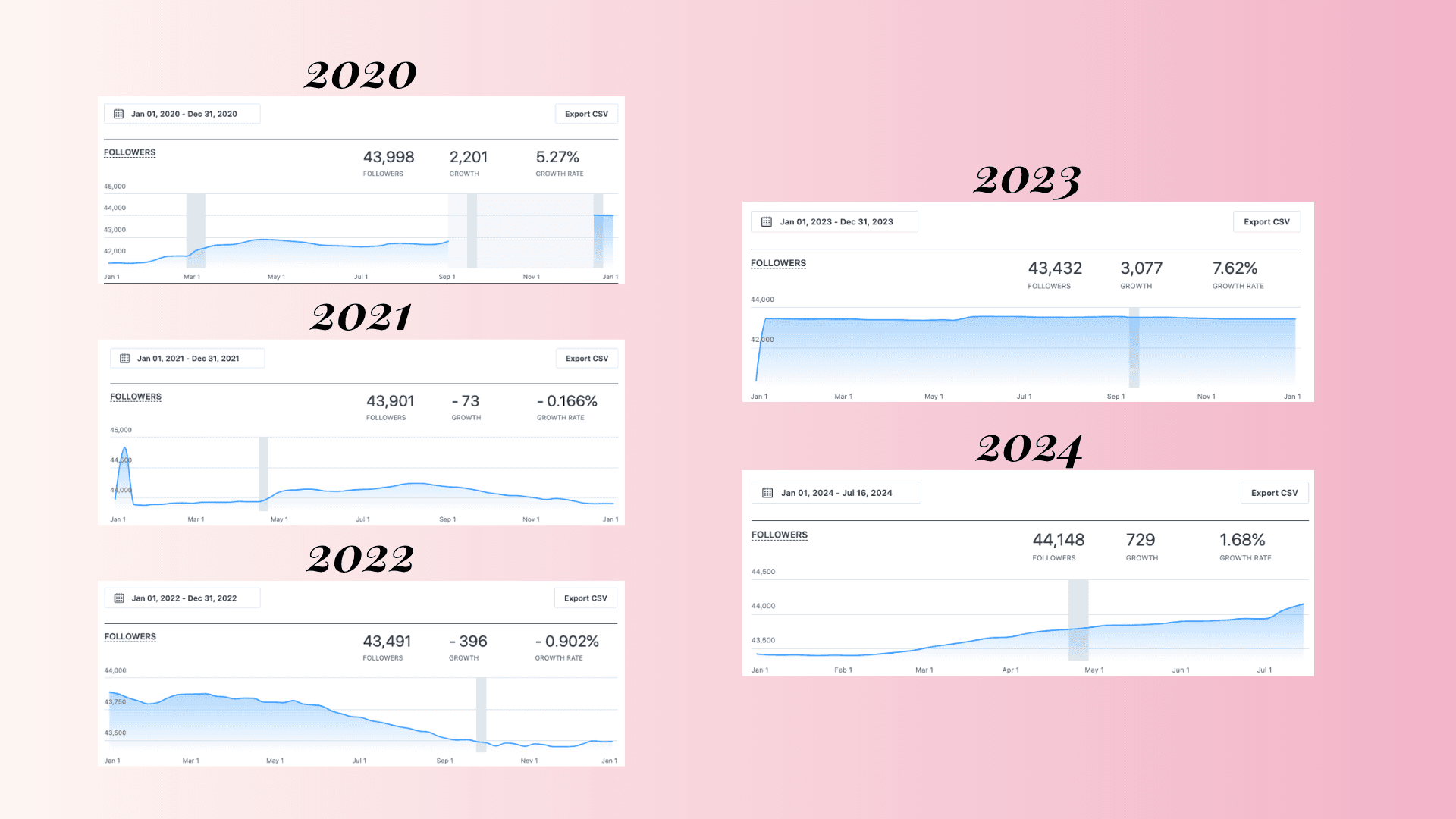
Followers sat flat around 43–44K from 2020 to 2024.
the result
43.7K
followers at the start
75K
followers today
↑ 72% growth in followers
05 — top performing content

A real content mix.

Three of the best performing posts on the account, each a different content type, showing what actually drove the engagement.

185Klikes
186comments
16.8Kshares
3.1Ksaves
737likes
21comments
16shares
34saves
817site visits
1.3Klikes
817site visits
06 — impact
+185%
increase in engagement rate
+72%
follower growth
off the clock

Hanjee FM.

Designed and built by Hanjee Na.

tune in →
Hanjee FM
889296100104108
80son air
vol
tune