case study 02 · music discovery

AI Music App

Soundsplore is a music focused mobile app that lets users create, share, and discover music. Acting as a social platform for music lovers, it helps users find songs based on their chosen color mood, using AI to curate personalized playlists.

Role
Product designer
Timeline
2023
Industry
B2C, AI Music App
Team
2 design · 1 PM · 2 engineers
00 — the challenge

A product without a clear identity.

Version 1 relied on an emoji grid for mood based music discovery, but it felt limited. Emojis couldn’t capture the nuance of how users actually feel, and the visual identity felt outdated, not matching the immersive, emotionally driven experience the client envisioned. The client wanted a redesign that made mood based music discovery feel more intuitive, accurate, and emotionally resonant, while also giving the brand a clearer, more modern identity.

When I joined the team, the product concept existed but the brand and visual identity lacked clarity and differentiation.

01 — the results

Redefining mood through color + AI

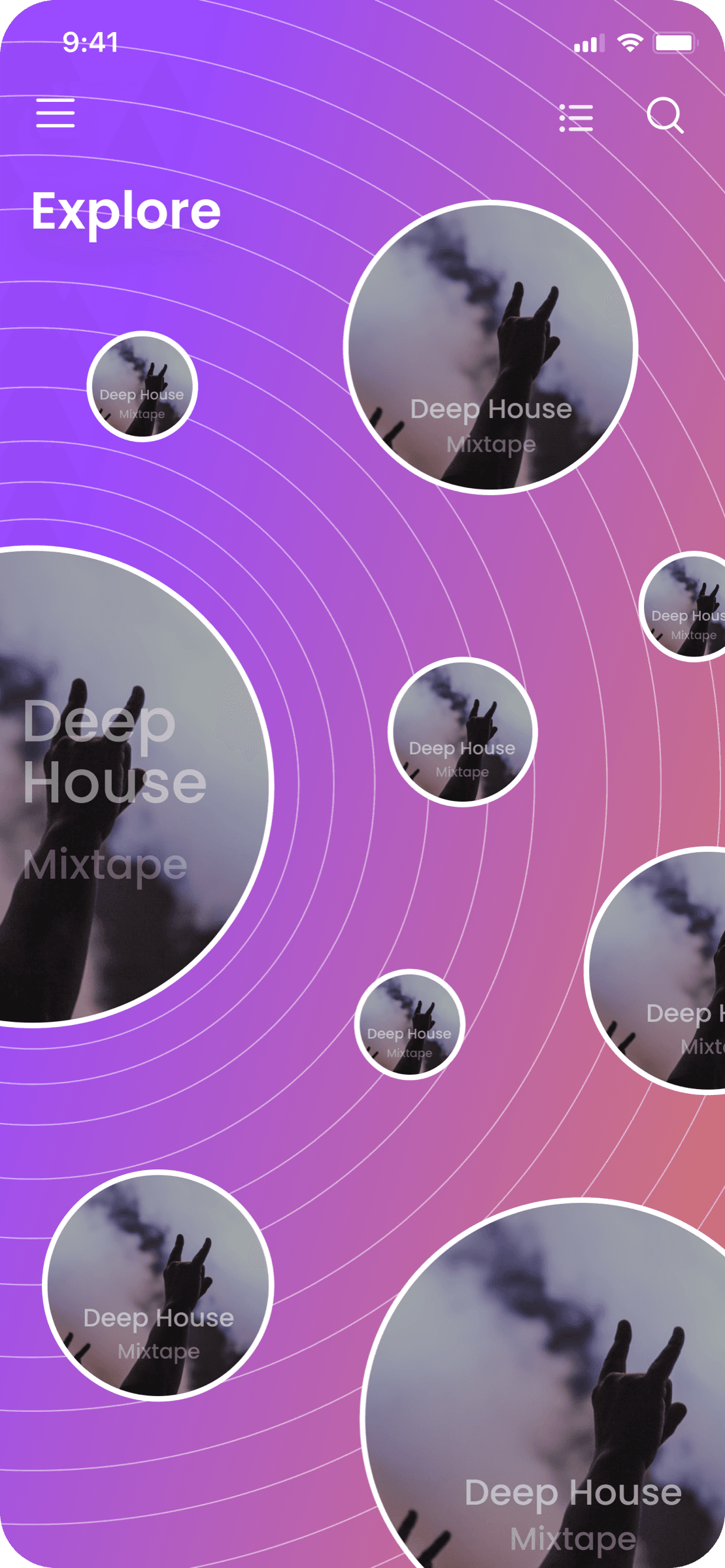
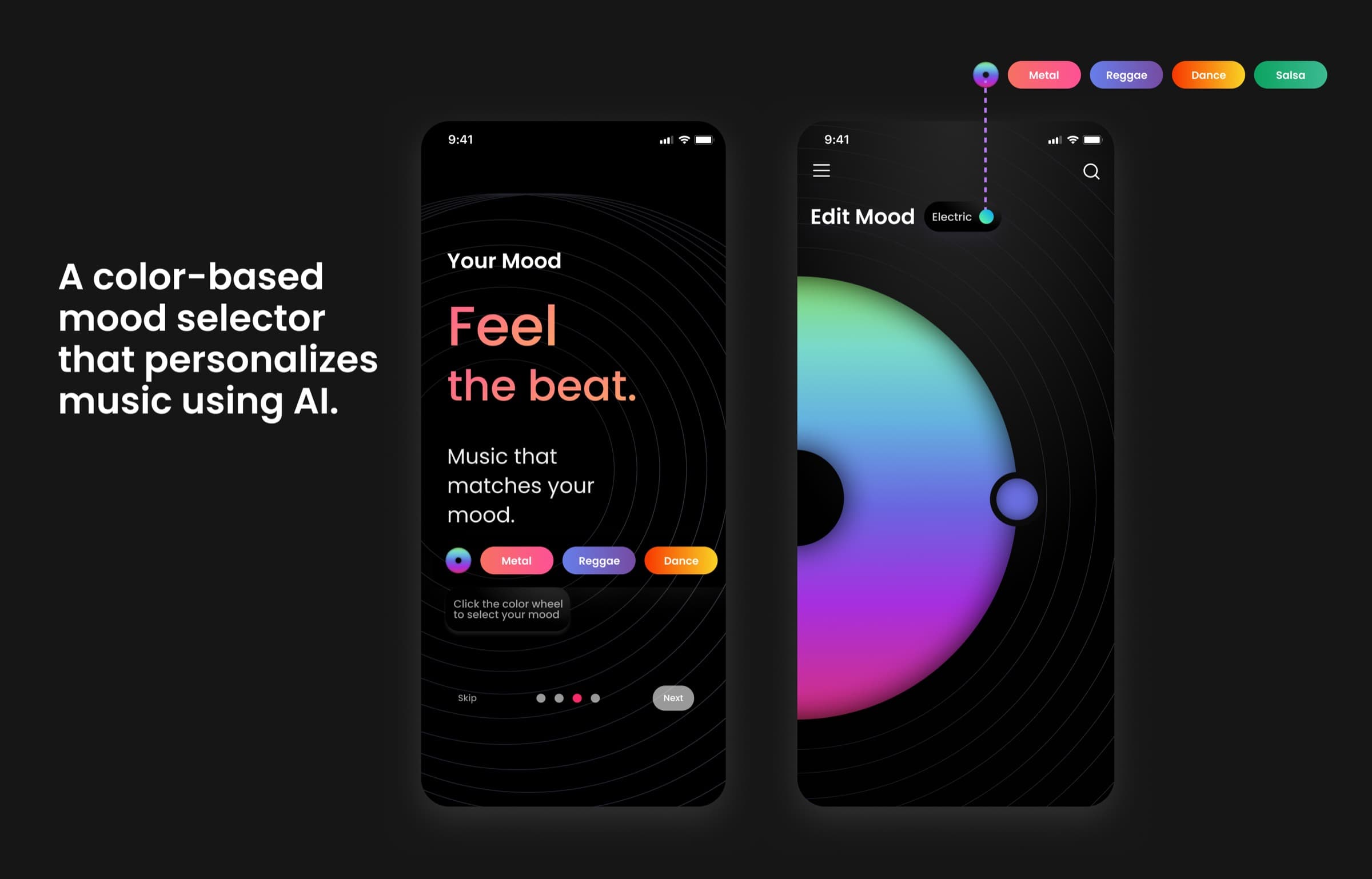
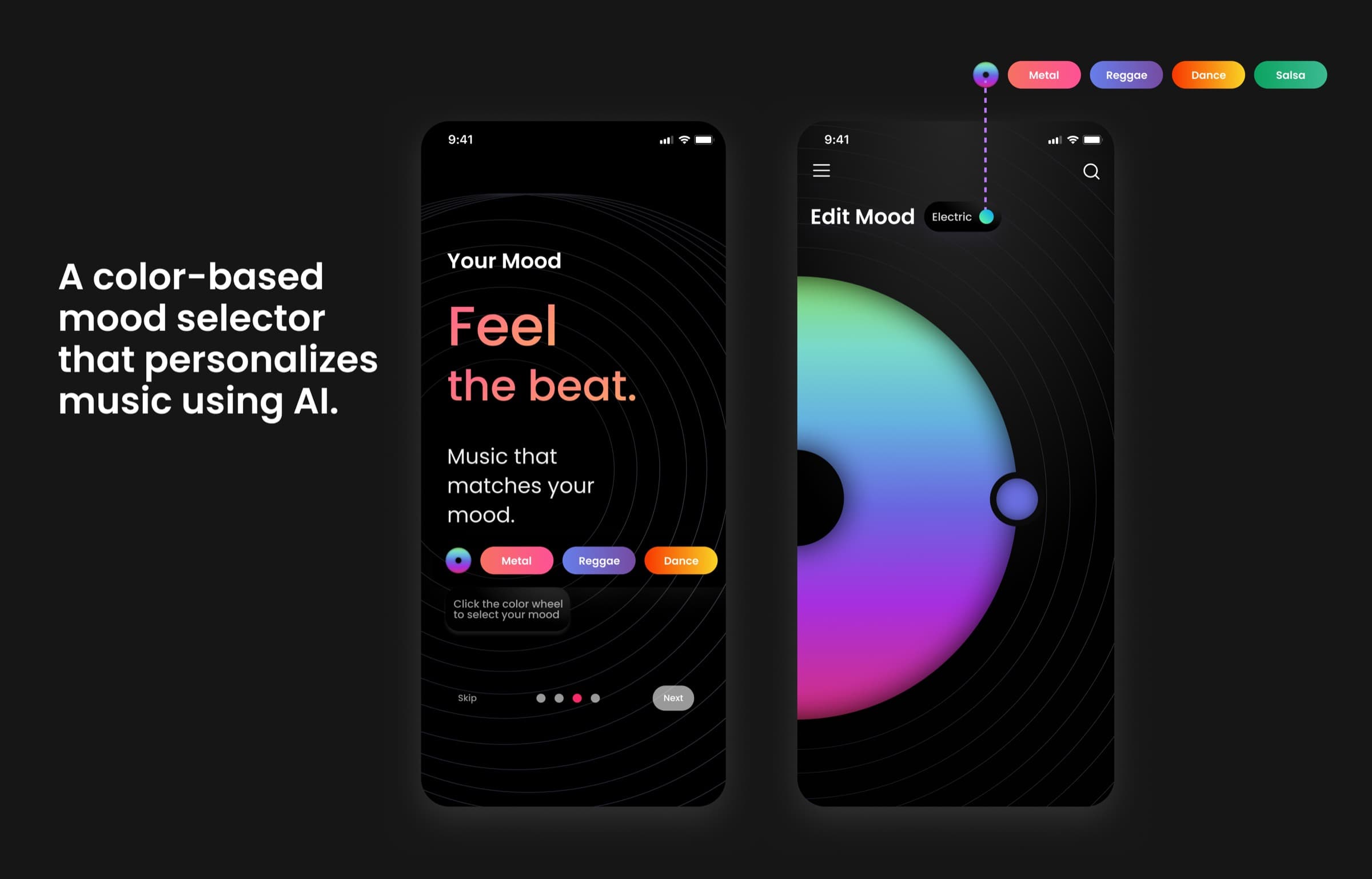
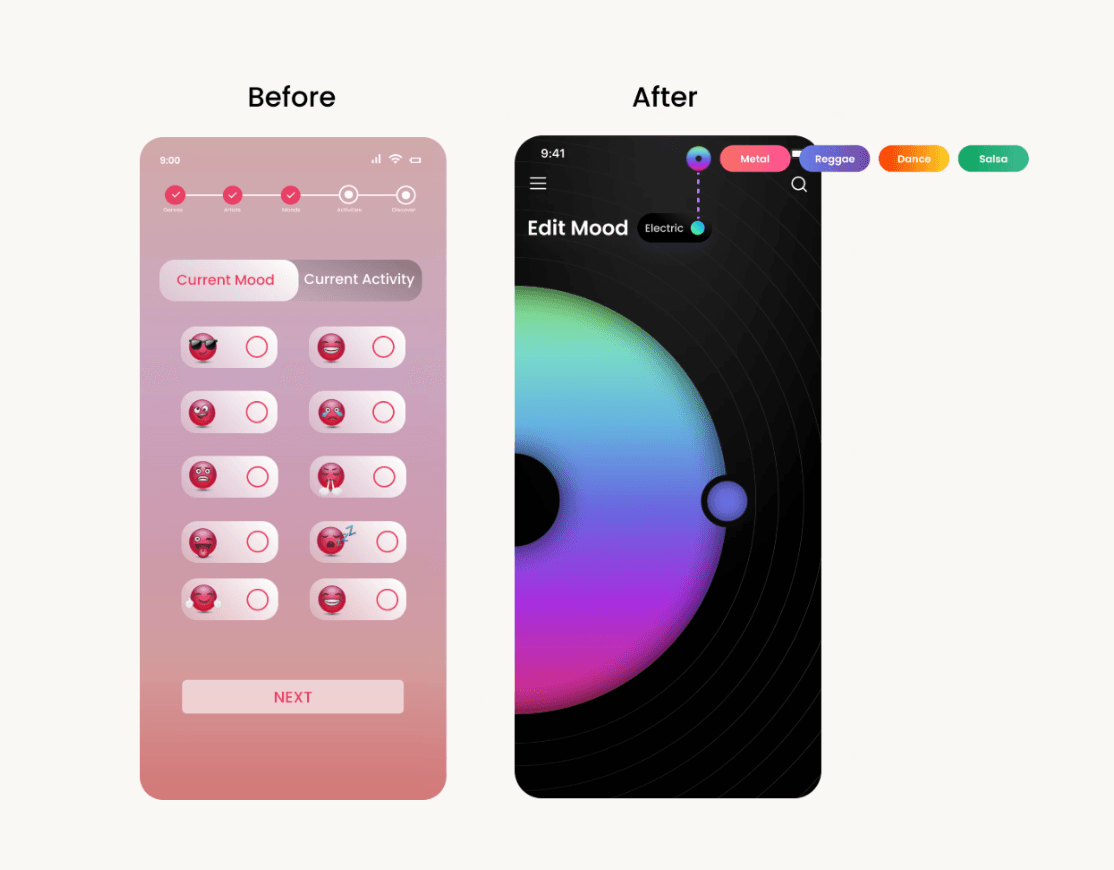
We redesigned how users pick their mood: from a grid of emojis (v1) to a color-based mood picker (v2).

Instead of tapping an emoji, users now pick colors that match how they feel. This gives us a more accurate read on their mood, so we can recommend music that actually fits.

The new design uses gradients and motion to make the experience feel more alive, easier to use, and more fun to share.

02 — design system

Design System

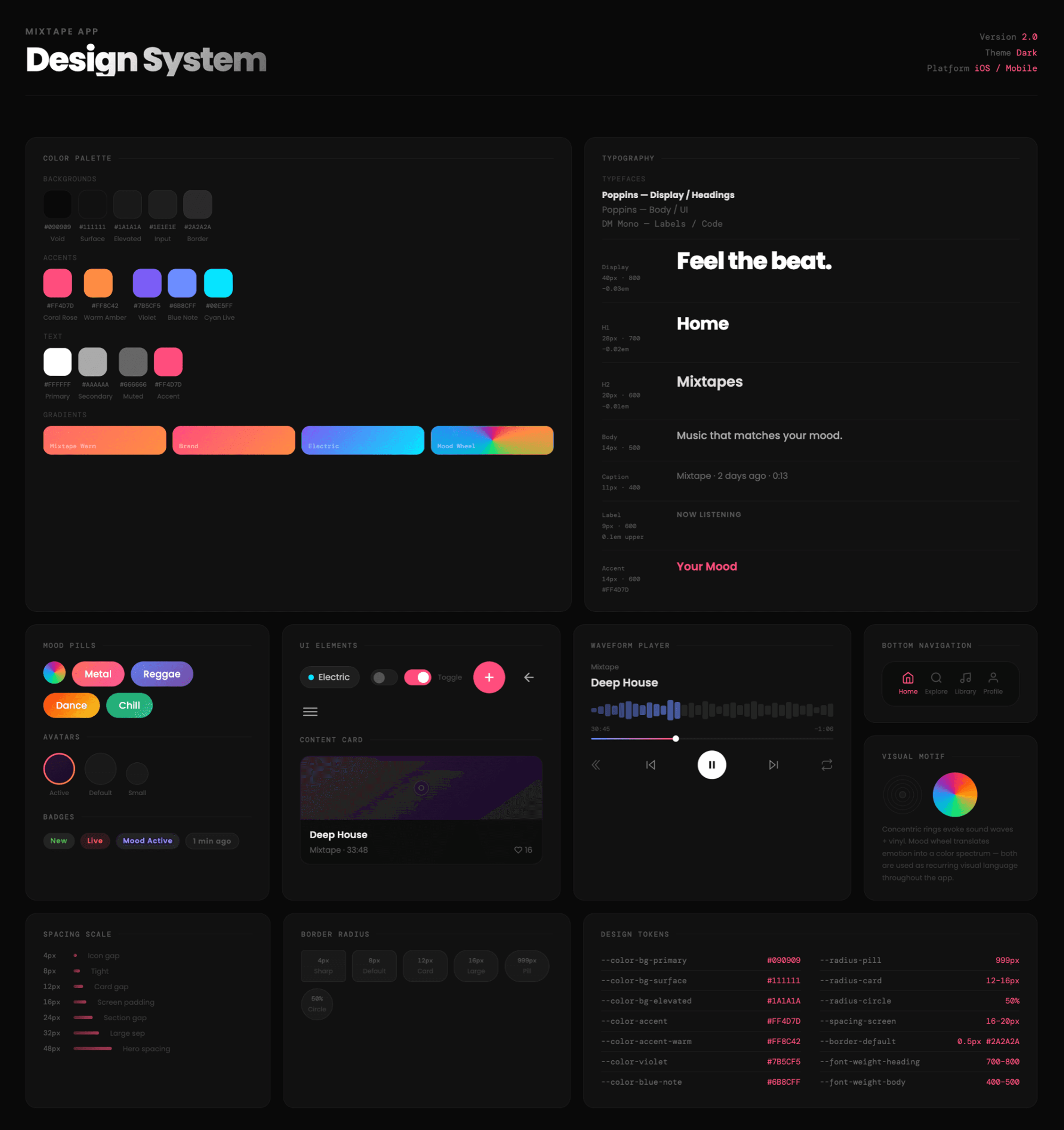
The design system was built around one principle: the app shouldn’t just play music - it should make users feel like they’re living inside it. Deep dark backgrounds, gradient colors rooted in color psychology, and fluid motion cues work together to create an immersive, almost futuristic visual language. I contributed to the mood color tokens, component patterns, and overall visual direction collaboratively with the team.

HMW INSIGHT

“How might we help users curate music based on their moods and emotions?”

03 — design decisions

Color as the interface for feelings.

decision 01

Color-mood Selection.

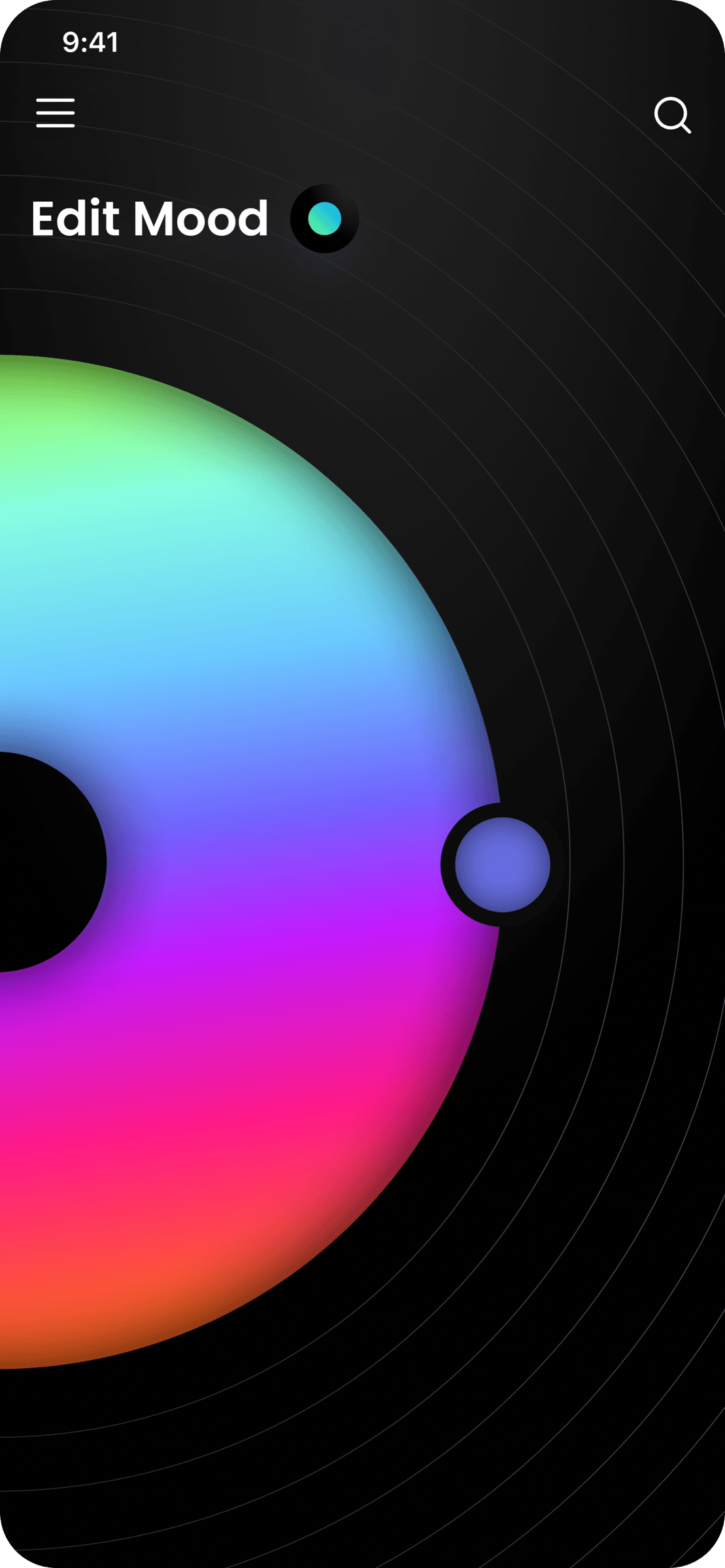
Moods and emotions rarely fit neatly into a single category - especially when it comes to music. The original emoji-based selection felt too rigid to capture that nuance, making it difficult for users to express how they truly felt. I redesigned it into an immersive, color-based mood wheel that treats emotion as a spectrum, giving the AI a richer understanding of each user’s state to curate a more personalized playlist.
decision 02

Color Psychology

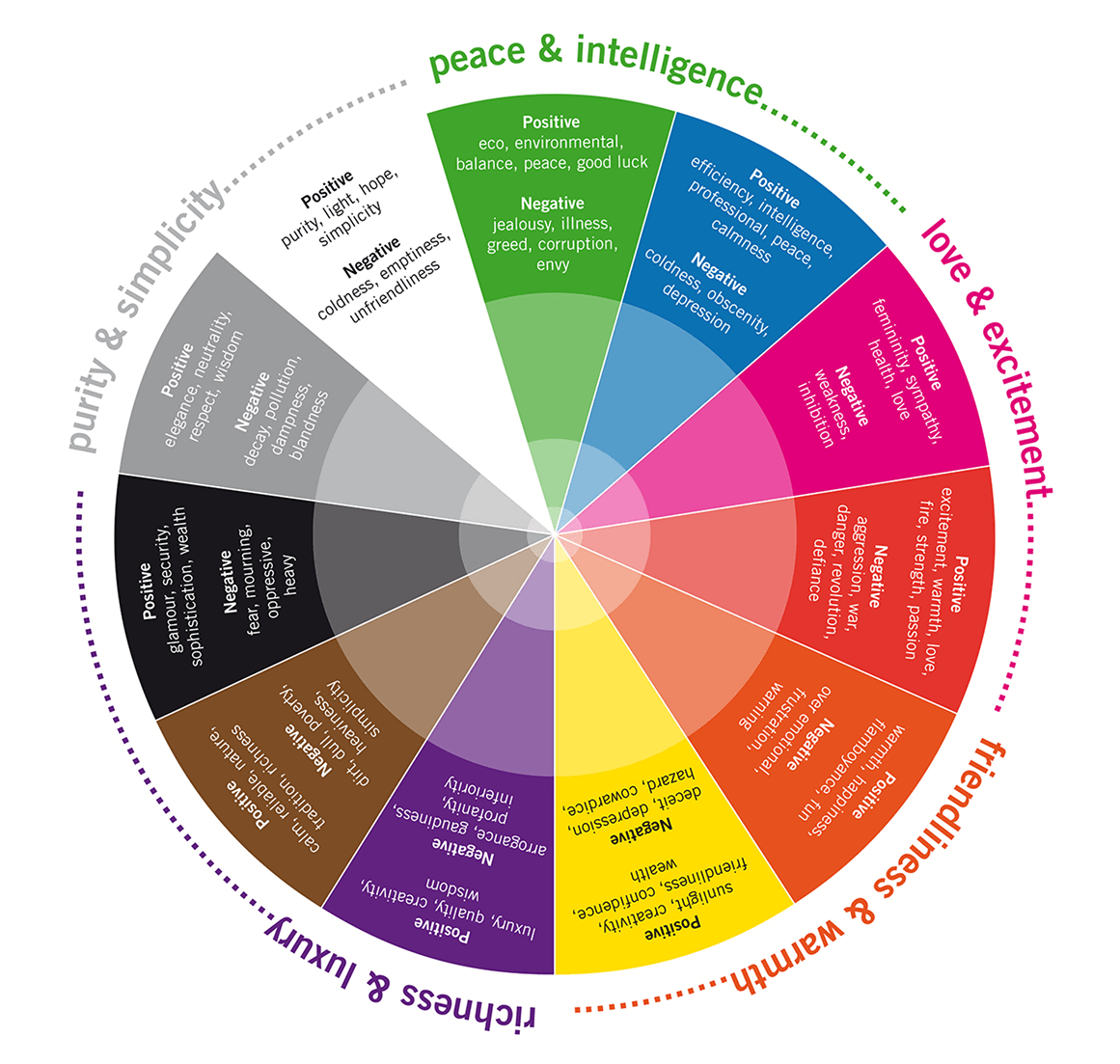
I based the mood-color mapping on established color-emotion research: warm hues like red tend to signal excitement and energy, cool hues like blue signal calm and focus, yellow signals happiness.

Emotions exist on a continuous spectrum, not as discrete fixed categories - one feeling blends into the next. I validated the mapping directly with users through the diary study and interviews, since cultural and individual variation meant the research alone wasn't enough.

Color is one of the fastest ways humans communicate emotional state without words

decision 03

Music Genre Color Mapping

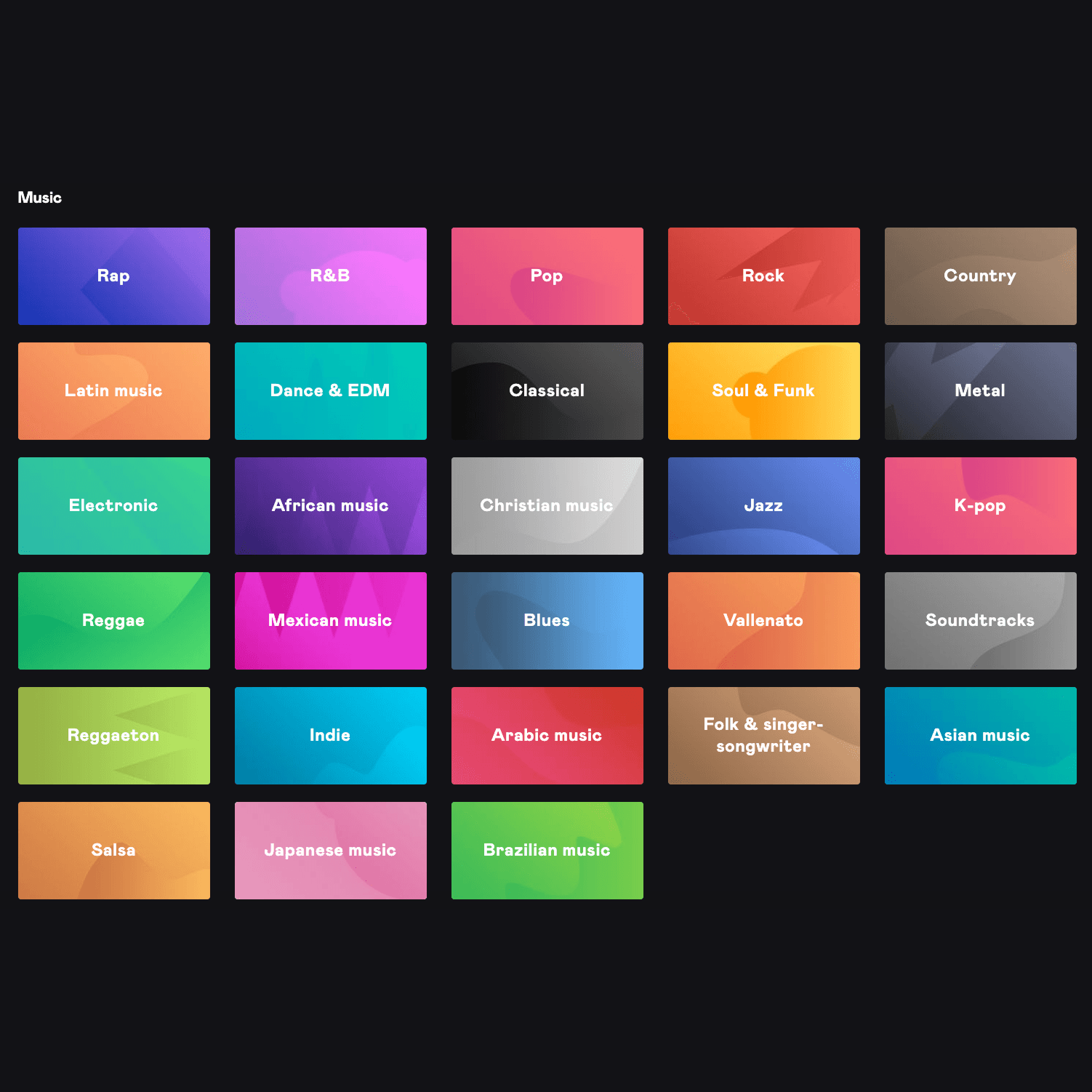
Music genres already carry strong color associations - Rock maps to red, Jazz to blue, Reggae to green, EDM to cyan.

These associations are culturally consistent - users intuitively recognize genre-color pairings without explanation. Even established platforms like Spotify have validated that genres carry inherent color associations.

Color and music genre together create a stronger emotional fingerprint than either alone

04 — insights

What the research surfaced.

insight 01

Moods can’t fit into boxes.

Emotions are fluid and layered. A rigid category system forces users to simplify how they actually feel, leading to less accurate music matching.

insight 02

Color speaks before words do.

People react to color instinctively. Using a color spectrum to express mood removes the cognitive friction of choosing from a text list.

insight 03

Genre + mood = full picture

Neither mood nor genre alone is enough to curate the perfect playlist. Combining both gives the AI a richer signal to personalize recommendations.

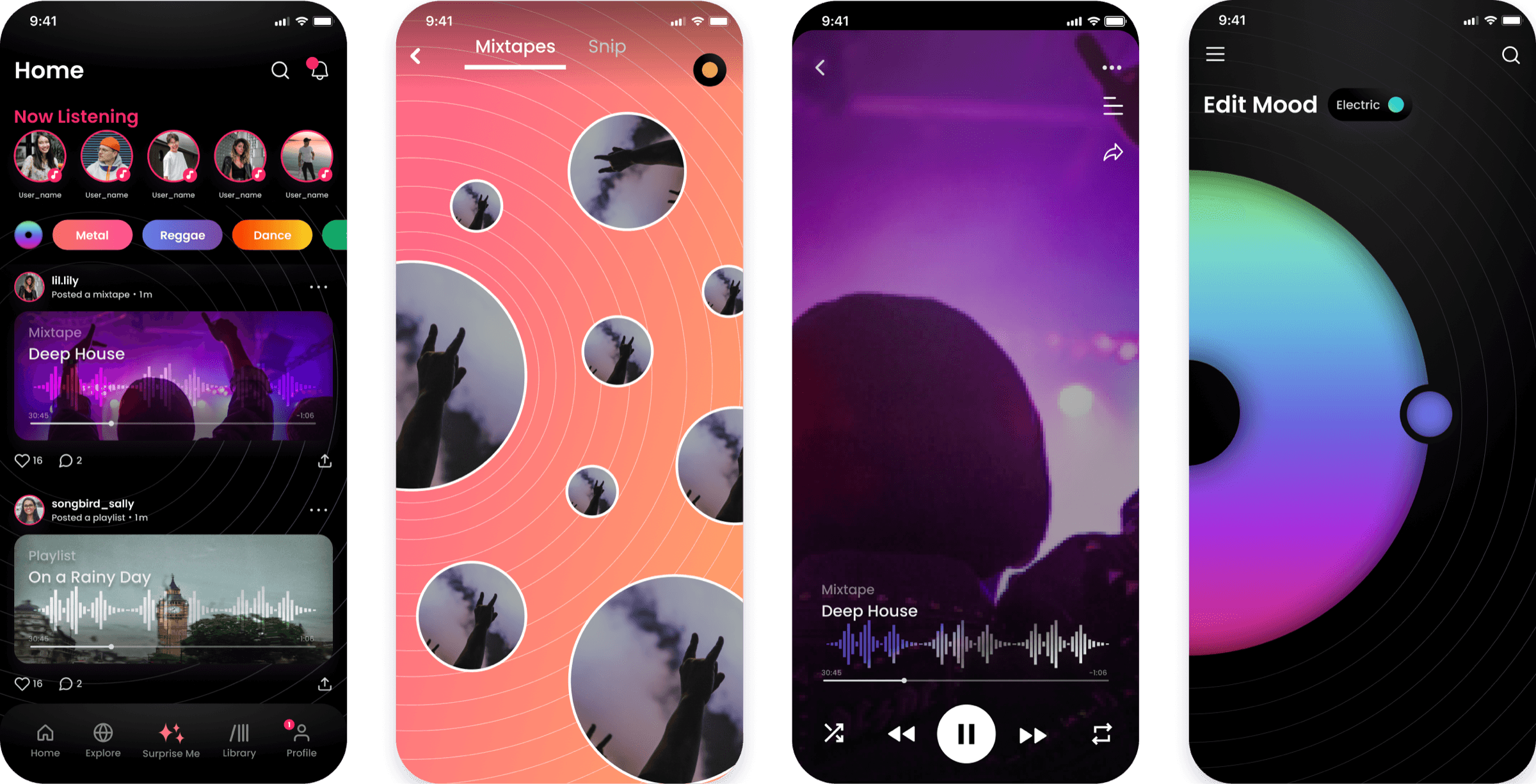
05 — final product

Design decisions.

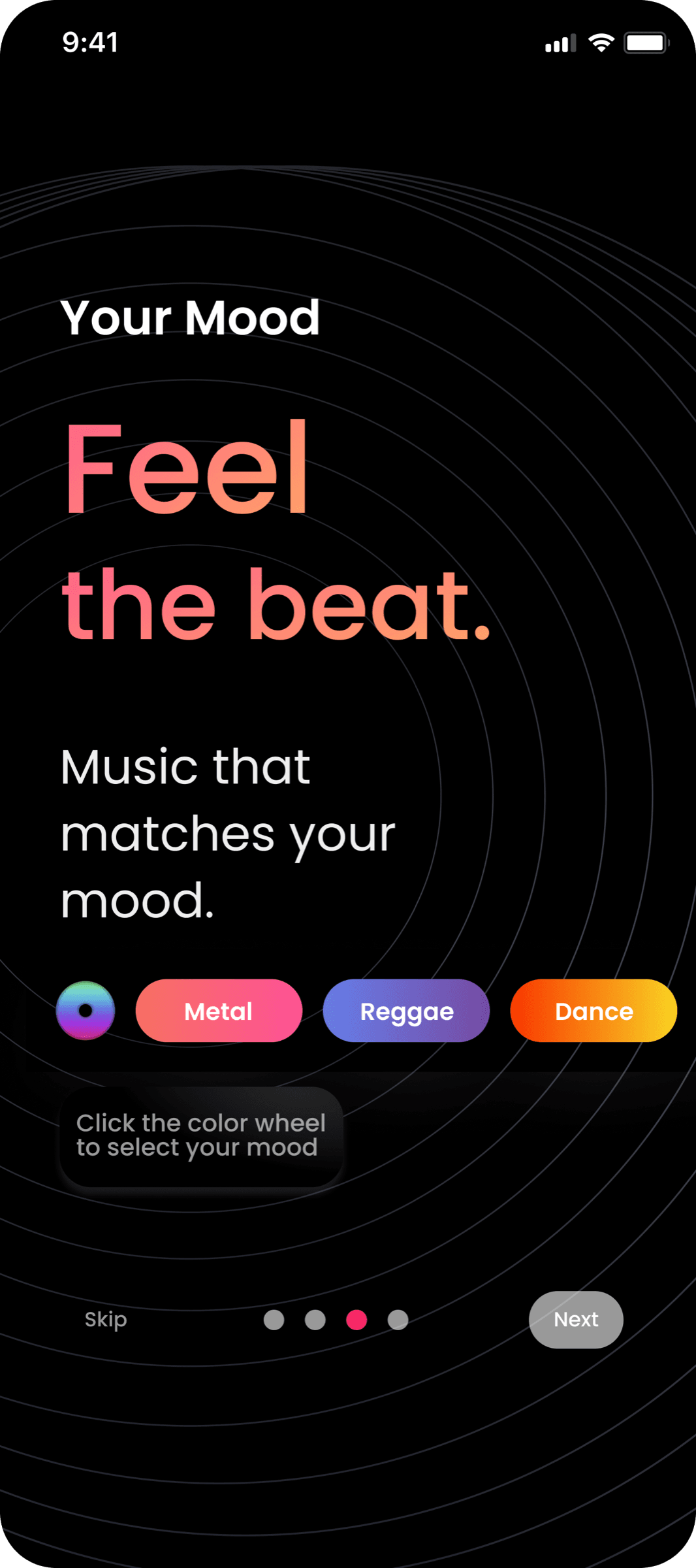
Curate Your Mood Playlist
Choose the music style that fits your taste
Select Your Mood Color
Drag to the color that matches how you feel
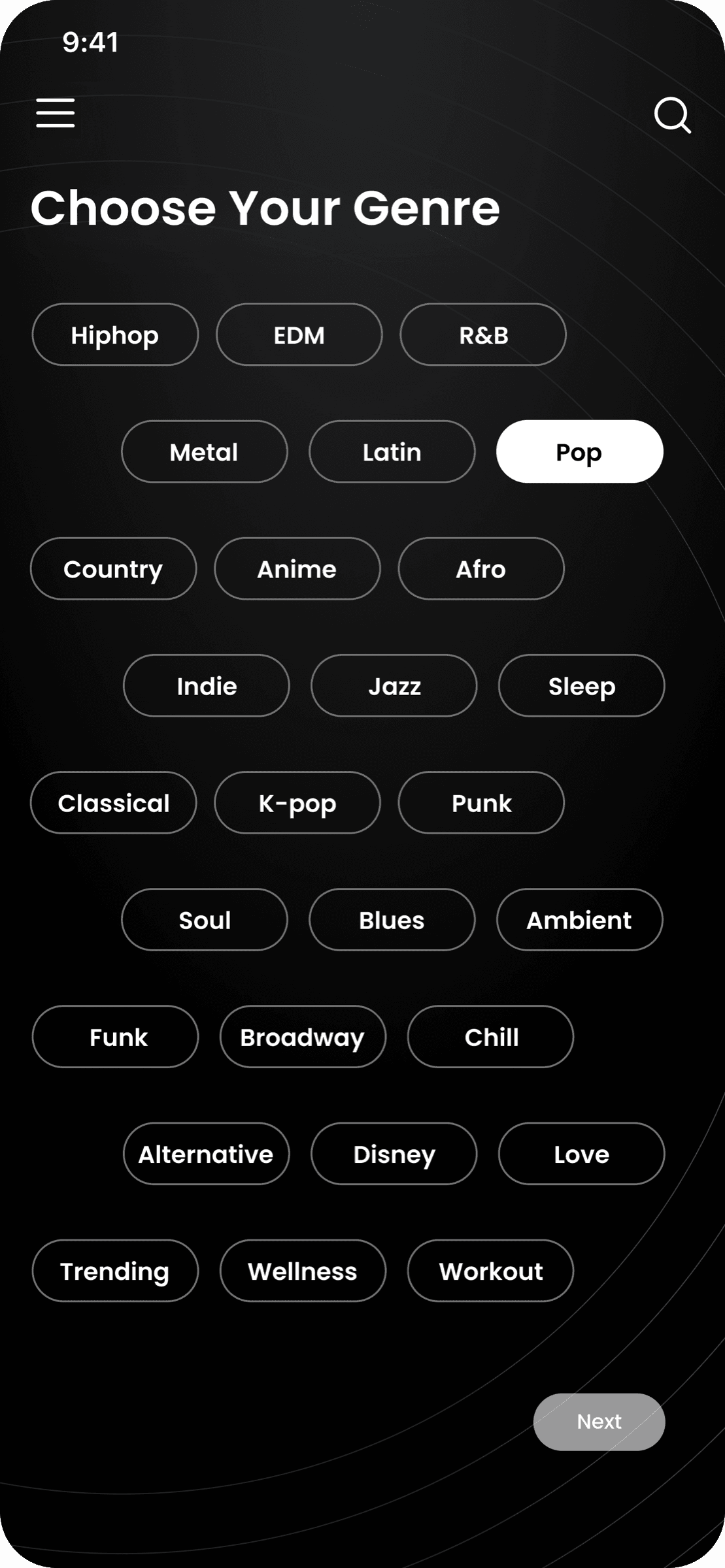
Pick Your Genre
Choose your music genre to curate the best playlists
AI Curates Your Music
Explore playlists matched to your genre + mood
06 — the impact
92%
task success rate in usability testing
12
user interviews, 2 rounds of prototype testing
10/12
users preferred the color-mood picker over the (v1) in concept testing
07 — reflection

What I’d carry forward.

The real breakthrough wasn’t the AI, it was choosing a more human input for it; Designing the right question mattered more than perfecting the answer. Next time, I’d test how well these color meanings translate across different cultures earlier in the process. Our first palette made sense within our own frame of reference, but wasn’t universal, and widening that research would have saved a round of relearning in build.

off the clock

Hanjee FM.

Designed and built by Hanjee Na.

tune in →
Hanjee FM
889296100104108
80son air
vol
tune